

Interior Design
Dark Floors vs Light Floors: Which Rugs Work Best
September 1, 2026·By Thibault Van Renne·3 min read

A client once asked me to recreate a 16th-century Safavid carpet they'd seen at auction, but smaller, in different colours, and "more contemporary." After twenty years of making bespoke rugs, I've learned that the best commissions start with the right questions rather than a grand vision.
Before our weavers in Nepal and northern India begin hand-knotting your piece, we need to understand how you actually live. I always ask clients about foot traffic, furniture placement, and whether children or pets will share the room. The answers decide the fibre, the knot count, and the pile height.
One of last year's commissions was a London townhouse. The client wanted a large-format piece for the entrance hall, an area with significant daily traffic. We chose hand-spun Tibetan highland wool for the entrance, since it holds up under daily use, and specified a tighter knot count. For the same client's bedroom we used natural silk with a looser weave, where the light matters more than the wear.
Ask yourself: will this be a centrepiece admired from a distance, or a rug the whole household walks over every day? Answer that honestly and the rest of the decisions follow.
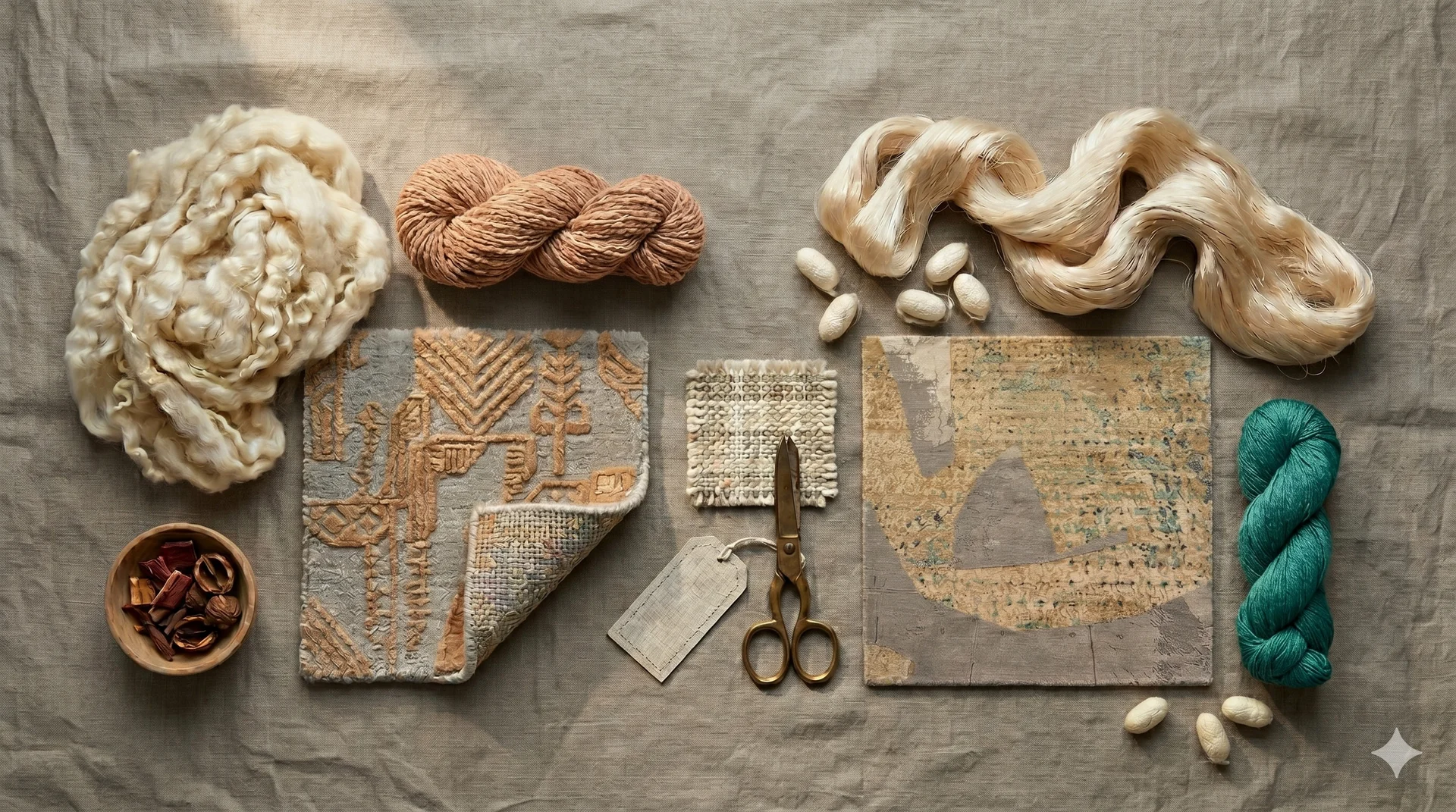
Most conversations about a bespoke rug start with colour and pattern, but the material decides more. I've watched clients fall for the shine of silk without asking where the rug will actually lie. Silk shows traffic sooner than wool, so in an entrance hall or under a dining table it is the wrong choice, however good it looks in the sample.
Our hand-spun wool from the Tibetan highlands springs back under traffic and takes on a patina over decades. Natural silk shines in a way wool never will, and it asks for more consideration in return. We also blend wool and silk in different ratios, silk for the parts of a design that should catch the light, wool for everything that takes the wear.
Ask your rug maker about the provenance of their materials. We have bought from the same spinners for decades, and our production is Care & Fair certified: independent audits of wages and working conditions. It is a quality question as much as an ethical one. A weaver who is paid properly and not rushed ties better knots.
Don't overlook cleaning and maintenance. A wool-silk blend might be perfect for your drawing room but impractical for a family kitchen. We always provide detailed care instructions, but choosing the right fibre for the room beats cleaning it afterwards.
The most common misconception about commissioning a bespoke rug is that you describe what you want and receive it six months later. In practice there are several rounds of drawings, samples and corrections before anything goes on the loom.
We start with long conversations about what you like, and what a client asks for at the start is rarely what they choose in the end. Someone arrives set on a deep burgundy, then sees the colour samples next to their own furniture and picks a quieter claret instead.
Our design team prepares technical drawings showing exact dimensions, pattern placement, and colour specifications. We then produce strike-offs (small samples showing actual materials and dyes) before production begins. This stage requires patience. Rushing approval of these samples often leads to disappointment with the finished piece.
Ask about revision policies before committing. How many design iterations are included? What happens if you want to modify colours after seeing the first samples? Settle that before you sign and there is nothing to argue about afterwards.
Hand-knotting cannot be rushed. Our weavers in Nepal and northern India tie between 4,000 and 8,000 knots a day, depending on the pattern, the number of colours, and the weaving density. A large drawing room piece typically requires around six months of dedicated work.
A rug commissioned properly is made to be handed down rather than replaced. Pieces we made in our early years are now with the children of the clients who ordered them, and they look better than they did new.
Price depends mostly on size, material and how complex the design is. A small bedroom piece starts around €3,000, a large reception room commission can pass €50,000. You are paying for months of skilled hand work, and for the wool and silk behind it, not for floor covering.
The commissions that go well are the ones where we have been honest with each other from the start about what is possible and what it costs. We'd rather decline a commission than deliver a disappointment.
Contact us or visit our showroom in Evergem, Belgium.

