

Care & Maintenance
The Complete Guide to Vacuuming a Hand-Knotted Rug
September 29, 2026·By Thibault Van Renne·3 min read

Most rooms are not rectangles, even when they look like one.
Corridors taper. Bay windows curve outward. A dining table stands alone in the centre of a vast open floor. A reading nook tucks itself into an alcove that no standard 200 x 300 will ever address properly. After two decades of working with architects, interior designers, and private clients across Europe and beyond, I have come to believe that the tyranny of the rectangular rug is one of the most persistent and unnecessary constraints in interior design. The moment a client discovers that their floor covering can respond to the geometry of their life, rather than the other way around, something shifts in how they think about every room they inhabit.
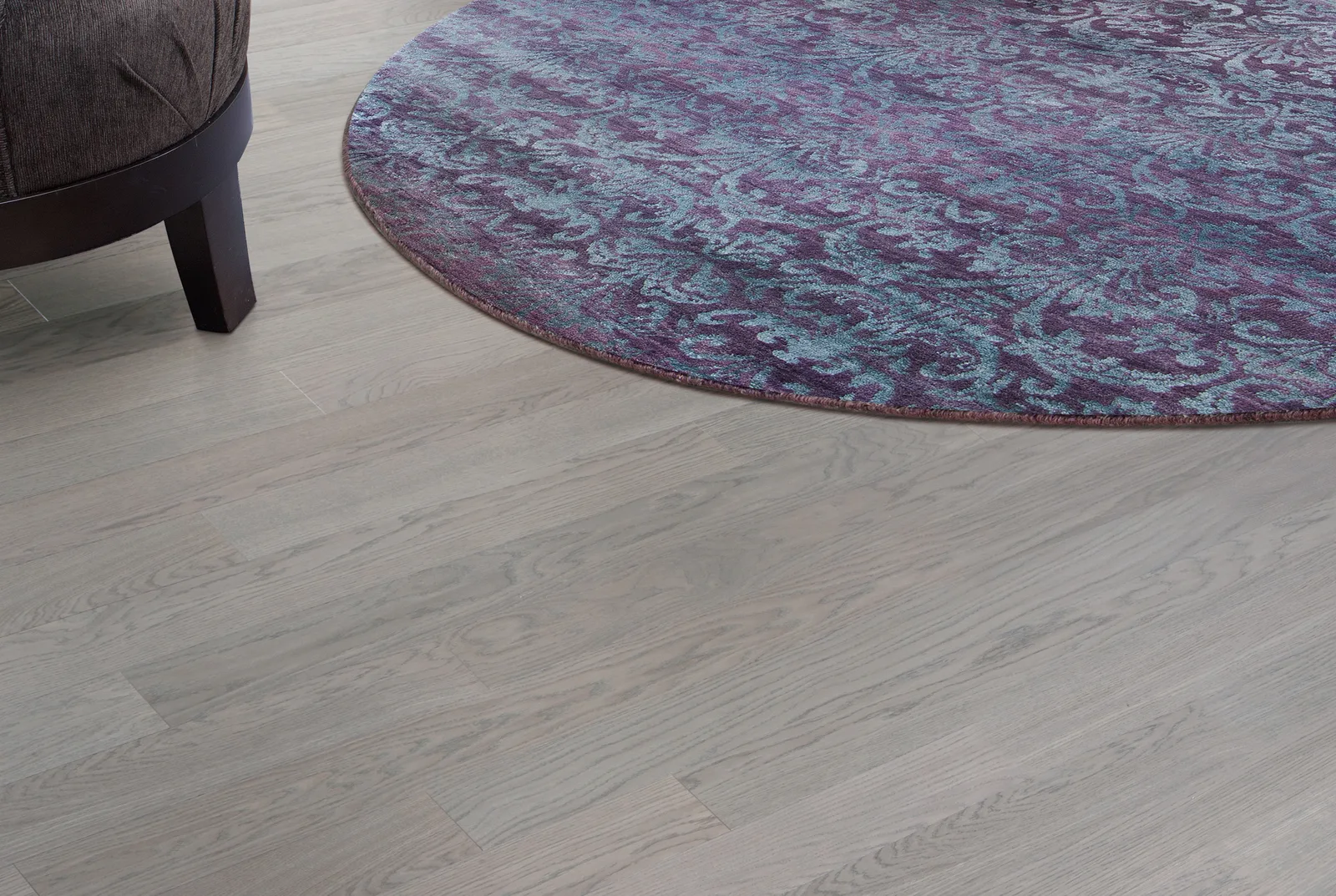
Round rugs are having a sustained moment, and for good reason. But I see them misused almost as often as they are well placed, which is why round rug placement deserves more serious attention than the average decorating guide affords it.
The first principle I always share: a round rug works best when it mirrors or counterpoints a dominant shape in the room. Beneath a circular dining table, the logic is obvious and satisfying. The rug should extend at least 60 to 70 centimetres beyond the table's edge, so that chairs remain on the rug even when pulled out. Beneath a round coffee table in a seating arrangement, the rug anchors the grouping while introducing a softness that rectangular formats rarely achieve.
Where round rugs fail is when they are placed timidly. Too small, centred in an enormous room with nothing to relate to, floating like a coin on a parquet sea. Scale matters enormously. A 250 cm round rug commands a space; a 150 cm round rug in the same room looks like an afterthought.
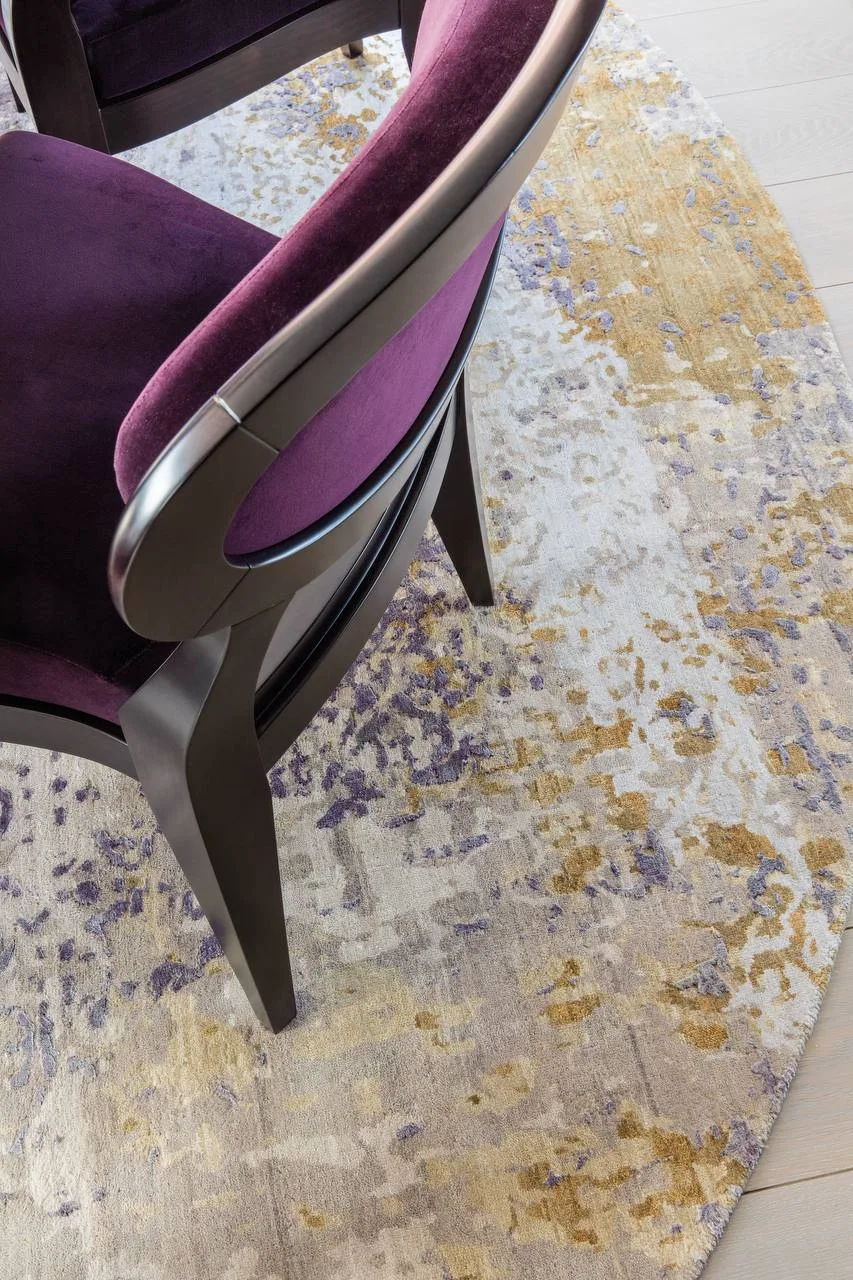
In our atelier in Nepal, where our master weavers work on traditional pit looms, producing a circular rug requires a fundamentally different warping and knotting approach than a standard rectangular piece. The tension must be calibrated from the centre outward, and the finishing (clipping, washing, stretching) demands a level of skill that separates a truly fine round rug from a passable one. When natural silk is introduced into the pile alongside our hand-spun wool, the way light travels across a curved surface becomes something worth seeing in person. The sheen shifts as you move around the piece, and no photograph ever fully captures it.
A well-chosen runner is one of the most transformative things you can do to a corridor, staircase, or kitchen. And yet it is consistently treated as an afterthought, something narrow and inexpensive to protect a floor, rather than a deliberate design decision.
My approach to runners is simple: treat them with exactly the same rigour you would apply to any significant rug in the house. The construction, the fibre quality, the colour palette, none of these considerations should be relaxed simply because the format is elongated. In fact, a corridor runner often receives more daily foot traffic than any other rug in the home, which makes the argument for quality even stronger.
In our India production, centred in Jaipur and the villages of Uttar Pradesh, where we work under Care & Fair certification to ensure fair wages and safe conditions for every weaver involved, we produce runners in lengths up to six metres without seaming. Maintaining consistent density and colour across that length is a genuine technical achievement, and it matters practically as well as aesthetically.
For staircase runners, I always recommend leaving a margin of bare wood on either side, typically five to eight centimetres, rather than wall-to-wall coverage. It grounds the piece, frames it, and allows the architecture of the staircase to participate in the composition.
Hexagonal rugs. Arched forms to follow the curve of a window seat. An irregular organic shape designed to work with a sculptural furniture arrangement. These are not eccentric requests. They are the logical conclusion of treating a rug as a bespoke object rather than a commodity.
What I ask clients to bring to these conversations is patience and precision. An unusual shape requires careful templating, ideally with a paper or cardboard mock-up made on site, and a clear understanding of how the pile direction will interact with the final form. It also requires a weaver confident enough in their craft to execute something that cannot be checked against a standard pattern. Our teams in Nepal and India have that confidence. It is built over generations.
The result, when it comes together, is a floor that feels genuinely resolved. Not assembled from whatever was available, but composed.
Contact us or visit our showroom in Evergem, Belgium.

