

Interior Design
Dark Floors vs Light Floors: Which Rugs Work Best
September 1, 2026·By Thibault Van Renne·3 min read
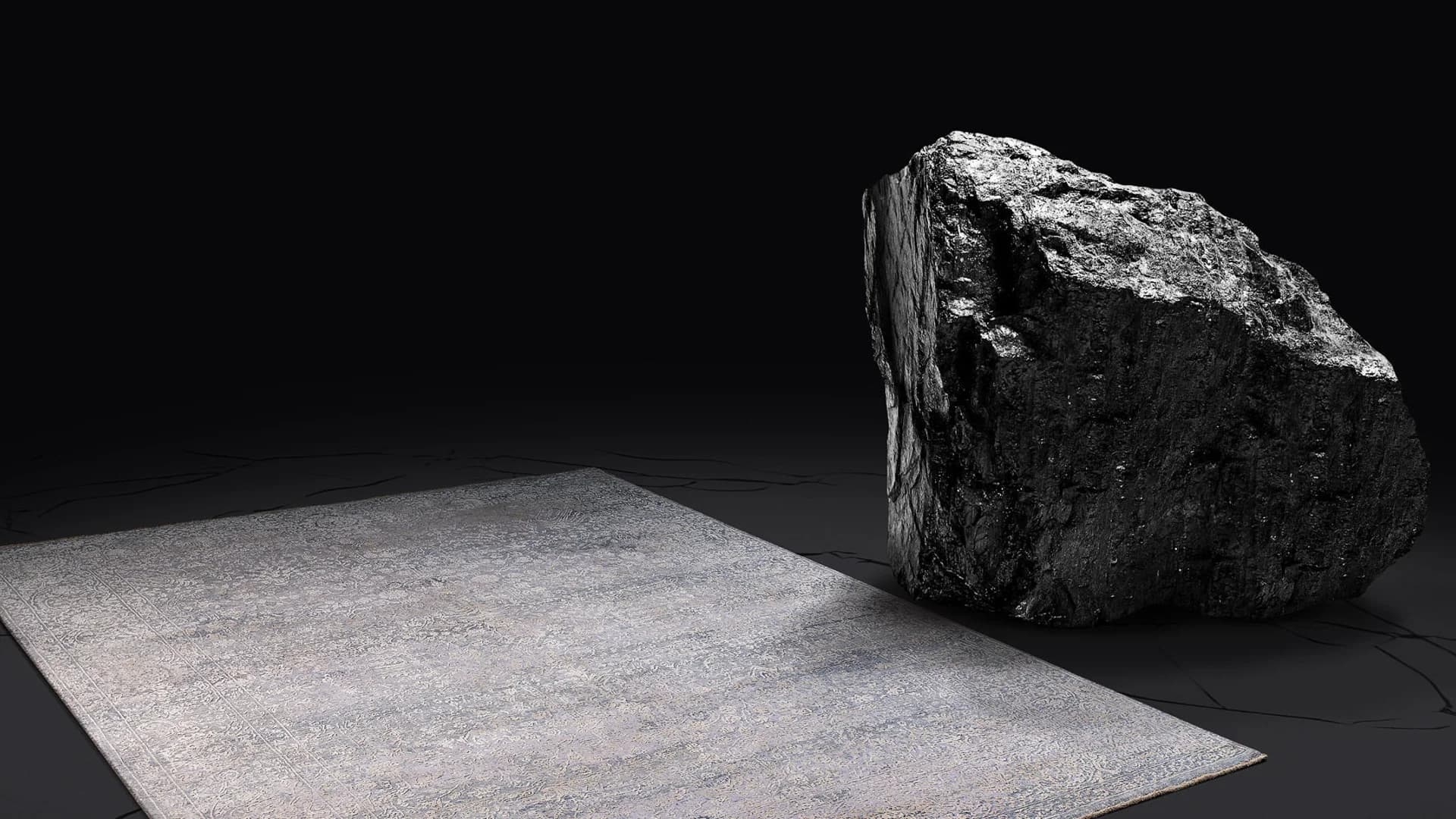
Architects plan ceilings, walls, lighting, but the floor often gets the least attention. In my experience, that's a mistake.
I've been designing rugs for 20 years, and I've worked with interior designers and architects on projects from private residences to hotels. The conversation almost always starts the same way: the client has chosen paint colours, furniture, curtains. The rug is an afterthought. But when you flip that process, when you start with the floor, everything else falls into place more naturally.
Starting with the rug is the first thing I say to an interior designer. A well-chosen rug defines a room more than any single piece of furniture. It sets the colour palette, and it decides whether the room reads warm or cool, bold or restrained. Once the rug is down, choosing the right sofa fabric, wall colour, or curtain material becomes easier because you already have your anchor.
There is a practical reason for this. A rug contains dozens of tones in its wool and silk. Matching a sofa to a rug is straightforward: you pick one of those tones. Matching a rug to a pre-selected sofa, however, means finding a rug that works with a fixed colour. That narrows your options considerably.
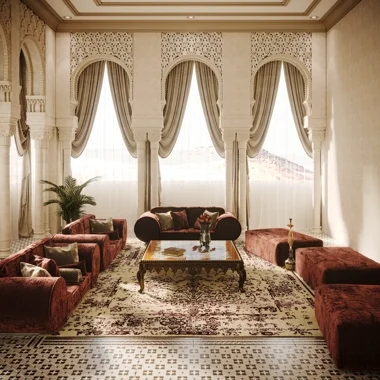
Open-plan living has become standard in contemporary architecture. But a large open space without visual anchors feels undefined, like a lobby rather than a home. A rug is the most effective way to create zones without building walls.
A dining area rug beneath the table. A living area rug in front of the sofa. A reading corner with its own smaller piece. Each rug signals a distinct function for the space around it, without blocking light or sightlines.
Something I find endlessly interesting about natural silk in rugs is how it interacts with light. Silk fibres are smooth and reflective; they shift colour depending on the angle of light and the direction you're looking from.
A silk rug viewed from one side of the room will appear lighter than from the other. This is because of pile direction: when you look into the pile, the fibres absorb light and appear darker. When you look along the surface, they reflect light and appear lighter. We call these the "light side" and "dark side" of the rug.
This means the rug changes throughout the day as natural light moves across it. In the morning it might appear warm gold. By afternoon, the same rug looks cooler, more silver. It's a subtle quality that no printed or machine-made material can replicate.
We don't do trends. Our designs are meant to anchor a room for decades, not for a season. That said, we're not making reproductions of traditional Persian or Turkish rugs either. Our approach is to take classical motifs (medallions, borders, arabesques) and deconstruct them. We abstract them, strip them back, and layer them in unexpected colour combinations.
You can see it across the collections. Abstract is pure colour fields and geometric composition, Spaces is built on architectural forms, Cameo on soft, tonal ones. Legends takes historical patterns apart and rebuilds them in our own language.
All of it is designed in our studio in Evergem and hand-knotted in India and Nepal using hand-spun wool and natural silk.
For projects where a standard piece won't work (an unusual room shape, a specific colour requirement, a particular scale) we design bespoke. We can modify any existing design in our collection or create something entirely new. The process takes longer, naturally, but the rug is shaped around that room's proportions, light and use from the start, rather than adjusted to fit them afterwards.
We work with architects and interior designers on bespoke projects regularly. If you have exact dimensions and a colour direction, we can develop proposals fairly quickly.
We don't sell through large retail chains. Every rug passes through our showroom in Evergem, Belgium. Noorwegenstraat 51. You're welcome to visit by appointment, or contact us.
The best way to understand what a hand-knotted designer carpet does to a room is to stand on one.

